
What Uncertainty Reveals About Leaders
There’s a pattern I’ve seen consistently across 30 years in financial services — and more recently in my coaching practice.
When economic conditions are stable and business is predictable, most leaders look roughly the same. Competent. Measured. Effective. You can’t always tell who has genuinely developed themselves and who has simply been running in good weather.
Then conditions shift. Markets tighten. Uncertainty builds. The headlines get louder. And almost immediately, you can see exactly who has done the inner work — and who hasn’t.
Uncertainty is the great revealer of leadership.
What Gets Revealed
I spent years sitting in risk committees at major financial institutions. When volatility spiked and the pressure was on, I watched what happened to leaders across every level. The pattern was reliable:
Leaders who hadn’t developed real self-awareness defaulted to their worst tendencies. The reactive ones got more reactive. The micromanagers tightened their grip. The avoiders went quiet. The ones who’d never built genuine trust with their teams suddenly found they had none to draw on.
The leaders who held their ground — who remained clear, calm, and decisive when everything around them was moving — were almost always the ones who had invested in themselves. Not just in their technical skills. In their capacity to lead under pressure. In the self-awareness to choose their response rather than default to their reflex.
That’s not a personality type. It’s a practice. And it’s developable.
What Uncertainty Actually Requires
When economic conditions become uncertain — when rate environments shift, when markets gyrate, when the business cycle turns — the instinct for many leaders is to manage the external: the numbers, the strategy, the organizational response.
That work matters. But it’s not enough on its own.
The leaders who navigate uncertainty best are also managing something internal: their own emotional temperature, their teams’ sense of confidence and direction, the culture of how decisions get made when nobody has a clear answer.
Those things don’t get managed through analysis. They get managed through presence. Through the kind of calm authority that comes from having done the deeper work of understanding yourself as a leader.
The Leaders Who Thrive in Difficult Conditions
In my coaching work with senior executives, I see this play out in real time. The leaders who come to me and do the most meaningful development work are the ones who recognize that their technical capabilities — which got them to their roles — are no longer the limiting factor.
What’s limiting them is how they show up. Under pressure. In the room. With their teams.
The good news: that’s not fixed. It’s not temperament. It’s not something you either have or you don’t. It’s a set of skills and patterns that can be developed with the right intention and the right partnership.
Uncertain times don’t have to expose weakness. They can be exactly the moment a leader decides to grow into something more.
If you’re in a season of external pressure and you’re curious about what it might reveal — or what it might unlock — I’d welcome a conversation.

About Steve
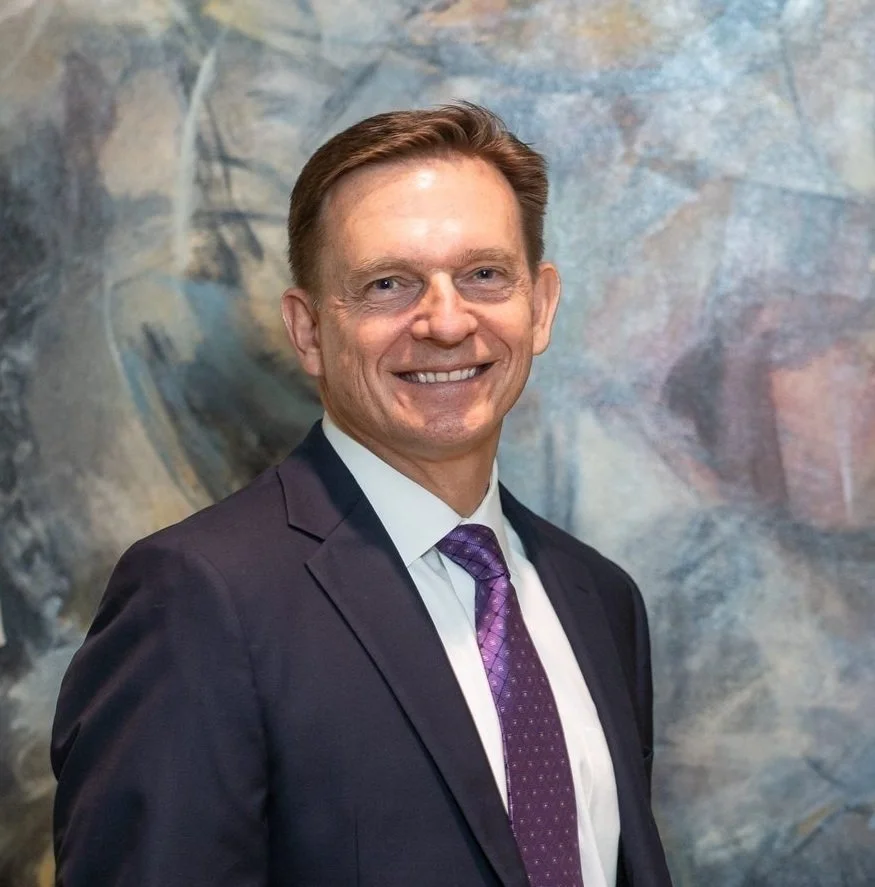
Steve Buisson, PCC is the Founder and CEO of Executive Balance LLC and a former Fortune 500 Chief Risk Officer. A Professional Certified Coach credentialed by the International Coaching Federation, he specializes in executive coaching, transition advising, and mentoring for senior leaders and business owners. Based in North Carolina, Steve works with a limited number of clients nationwide — by design. Book a complimentary call.